

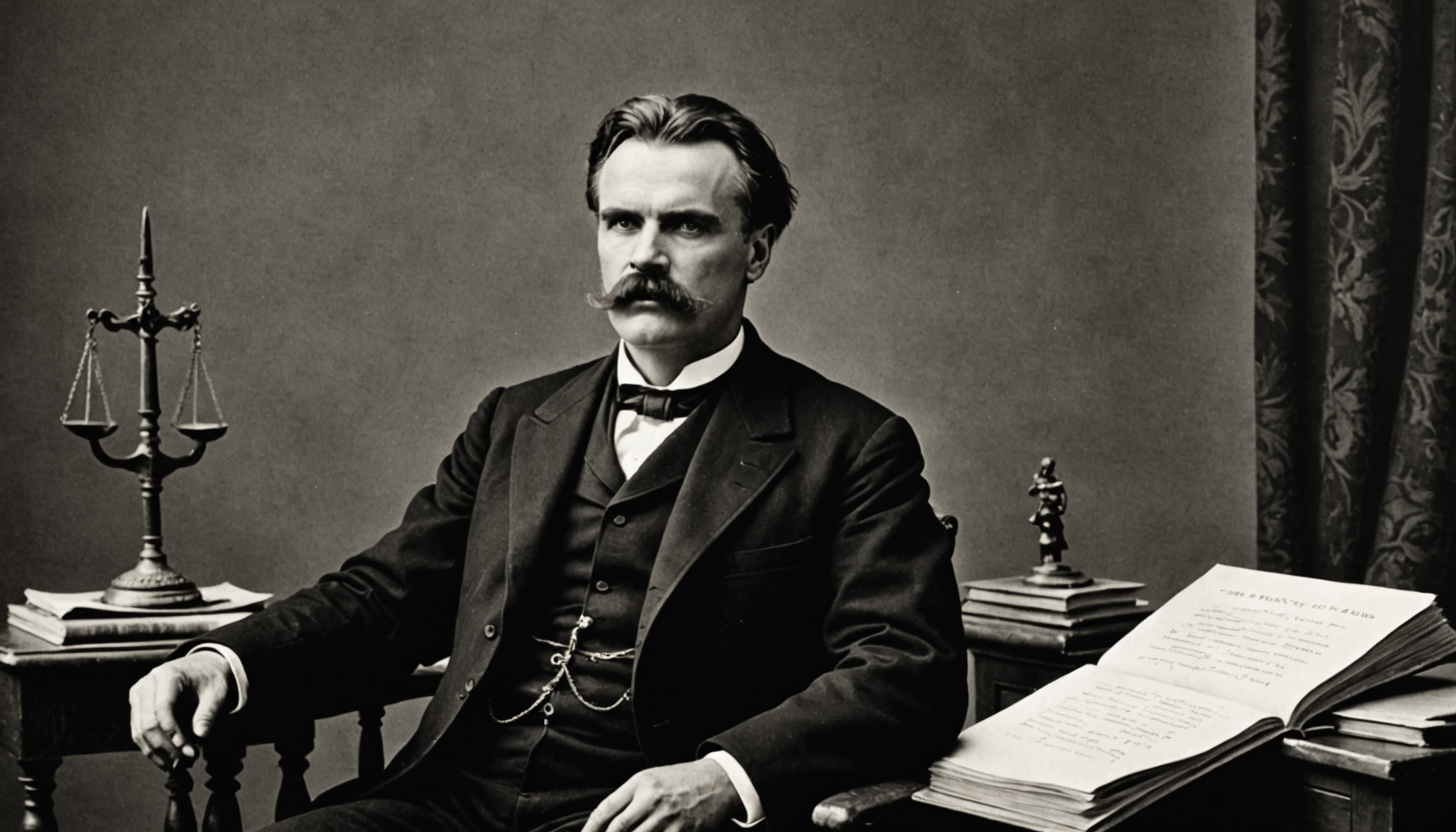
Friedrich Nietzsche’s proclamation of the “Death of God” is one of the most provocative and enduring ideas in modern philosophy. This phrase, which appears in his work “The Gay Science,” encapsulates a profound shift in the landscape of Western thought. Nietzsche was not merely announcing the decline of religious belief; he was articulating a seismic cultural transformation that would reverberate through the realms of morality, meaning, and individual existence. The “Death of God” signifies the end of an era where divine authority provided a foundation for truth and ethical values. In a world where God is no longer a guiding force, humanity is left to grapple with the implications of this absence.
The implications of Nietzsche’s assertion extend far beyond theological discourse. It challenges individuals to confront the void left by the absence of an absolute moral compass. In a society that has traditionally relied on religious frameworks to define right and wrong, Nietzsche’s declaration invites a radical rethinking of how we derive meaning and purpose in our lives. This exploration is not merely an academic exercise; it has real stakes for how we navigate our relationships, our communities, and our responsibilities to one another in an increasingly secular world.
Friedrich Nietzsche’s proclamation of the “death of God” has sparked extensive philosophical discussions about morality, meaning, and the human condition. For those interested in exploring this concept further, a related article that delves into the implications of Nietzsche’s ideas can be found at Philosophy for Lunch. This resource provides insights into how Nietzsche’s thoughts resonate in contemporary debates, making it a valuable read for anyone seeking to understand the profound impact of his philosophy.
The historical and cultural context of Nietzsche’s idea
To fully appreciate Nietzsche’s concept of the Death of God, it is essential to situate it within the historical and cultural milieu of the late 19th century. This was a time marked by rapid industrialization, scientific advancement, and the rise of secular ideologies. The Enlightenment had already begun to erode the unquestioned authority of religious institutions, as thinkers like Voltaire and Kant championed reason and empirical evidence over faith. By Nietzsche’s time, this trend had accelerated, leading to a growing skepticism about traditional beliefs.
The backdrop of Nietzsche’s thought also includes the profound existential crises faced by individuals in a rapidly changing world. The decline of religious authority coincided with the rise of modernity, which brought about new social dynamics and existential uncertainties. As people moved from rural communities into urban centers, they encountered diverse perspectives that challenged their inherited beliefs. In this context, Nietzsche’s declaration serves as both a diagnosis of contemporary malaise and a call to action for individuals to forge their own paths in a world devoid of divine guidance.
The implications of the Death of God for morality and meaning

The Death of God carries significant implications for our understanding of morality and meaning. Without a divine source to dictate ethical standards, Nietzsche posits that individuals must confront the reality that moral values are not absolute but rather human constructs. This realization can be both liberating and daunting. On one hand, it frees individuals from dogmatic constraints; on the other, it places the burden of creating meaning squarely on human shoulders.
In this new landscape, traditional moral frameworks may crumble, leading to what Nietzsche describes as nihilism—the belief that life lacks inherent meaning or value. Nihilism can manifest as despair or apathy, as individuals grapple with the absence of an overarching purpose. However, Nietzsche does not advocate for resignation; instead, he encourages a revaluation of values. He urges individuals to embrace their freedom to create their own moral systems, grounded in personal experience and authentic existence. This process requires courage and introspection, as it demands that we confront uncomfortable truths about ourselves and our place in the world.
The role of the individual in a world without God

In a post-God world, the role of the individual becomes paramount. Nietzsche champions the idea that each person must become an active participant in shaping their own destiny. This notion aligns with his concept of the “will to power,” which suggests that human beings are driven by an inherent desire to assert themselves and influence their surroundings. In this context, individuals are not merely passive recipients of societal norms; they are creators of their own values and meanings.
This emphasis on individual agency raises important questions about responsibility and accountability. In a society where traditional moral frameworks have eroded, individuals must grapple with the consequences of their choices more acutely than ever before. The absence of divine oversight means that ethical decisions are no longer dictated by external authorities but must be navigated through personal reflection and social engagement. This shift can foster a sense of empowerment, as individuals recognize their capacity to shape their own lives and contribute to the collective good.
Friedrich Nietzsche’s proclamation of the “death of God” has sparked extensive philosophical discourse, exploring the implications of a world devoid of divine authority. For those interested in a deeper understanding of this concept, a related article can be found at Philosophy for Lunch, which delves into the existential consequences and the challenges of morality in a secular age. This exploration not only highlights Nietzsche’s influence on modern thought but also invites readers to reflect on the evolving nature of belief and meaning in contemporary society.
Nietzsche’s critique of traditional religious beliefs and institutions
| Concept | Explanation |
|---|---|
| Death of God | Nietzsche’s idea that the belief in God’s existence is no longer meaningful or relevant in modern society. |
| Implications | Loss of absolute truth, moral values, and purpose, leading to nihilism and existential crisis. |
| Response | Nietzsche proposed the “will to power” and the creation of new values as a way to overcome the void left by the death of God. |
Nietzsche’s critique extends beyond mere theological assertions; it encompasses a broader examination of religious beliefs and institutions that have historically shaped human thought and behavior. He argues that organized religion often stifles individuality and creativity by imposing rigid moral codes that discourage personal exploration. In his view, traditional religious frameworks can lead to a form of herd mentality, where conformity takes precedence over authentic self-expression.
Moreover, Nietzsche contends that many religious institutions perpetuate a life-denying ethos that devalues human existence in favor of an otherworldly promise of salvation. He challenges the notion that suffering is inherently virtuous or that self-denial leads to spiritual enlightenment. Instead, he advocates for an affirmation of life in all its complexities—joys and sorrows alike. By critiquing these traditional beliefs, Nietzsche invites individuals to reconsider their relationship with faith and spirituality, encouraging them to seek meaning beyond dogma.
Friedrich Nietzsche’s proclamation of the “death of God” serves as a profound commentary on the decline of traditional religious values in the modern world. This concept is intricately explored in various philosophical discussions, including a compelling article that delves into its implications for morality and meaning in contemporary society. For those interested in a deeper understanding of Nietzsche’s ideas, you can read more in this insightful piece on the subject. The article can be found here, offering a thorough examination of how Nietzsche’s thoughts resonate with current existential dilemmas.
The concept of the Ubermensch and the revaluation of values
Central to Nietzsche’s philosophy is the concept of the Ubermensch, or “Overman,” which embodies his vision for humanity in a post-God world. The Ubermensch represents an individual who transcends conventional morality and societal norms to create their own values. This figure is not merely a superhuman but rather an archetype for those who embrace their freedom and responsibility in shaping their existence.
The revaluation of values is a crucial aspect of this concept. Nietzsche argues that in order to thrive in a world devoid of divine authority, individuals must critically examine existing moral frameworks and challenge prevailing norms. This process involves discarding outdated beliefs that no longer serve humanity’s evolving needs while simultaneously cultivating new values that affirm life and promote creativity. The Ubermensch serves as an inspiration for this transformative journey—an embodiment of human potential unbound by traditional constraints.
The influence of Nietzsche’s idea on 20th and 21st century philosophy and culture
Nietzsche’s ideas have left an indelible mark on 20th and 21st-century philosophy and culture, influencing a diverse array of thinkers across various disciplines. Existentialists like Jean-Paul Sartre and Martin Heidegger drew upon Nietzsche’s insights into individual agency and the search for meaning in an indifferent universe. Their works reflect a deep engagement with the challenges posed by nihilism and the quest for authenticity in a secular age.
Moreover, Nietzsche’s critique of traditional values has resonated within contemporary discussions surrounding ethics, politics, and identity. Movements advocating for social justice often grapple with questions about power dynamics and moral relativism—issues that echo Nietzschean themes. In popular culture, his ideas have permeated literature, art, and film, inspiring narratives that explore themes of existential struggle, self-creation, and the quest for meaning in a fragmented world.
The ongoing relevance of the Death of God in contemporary society
As we navigate the complexities of contemporary society, Nietzsche’s concept of the Death of God remains profoundly relevant. In an age marked by rapid technological advancement, shifting cultural norms, and increasing secularization, individuals continue to grapple with questions about morality, purpose, and identity. The challenges posed by nihilism are ever-present as we confront existential uncertainties in our personal lives and collective experiences.
Nietzsche’s call for individuals to embrace their freedom and responsibility resonates strongly today as we seek to forge meaningful connections in an increasingly fragmented world. His critique of traditional beliefs encourages us to question inherited values while fostering an environment where diverse perspectives can flourish. Ultimately, the Death of God invites us to embark on a journey toward self-discovery—a journey that requires courage, introspection, and a commitment to creating our own meanings in a world where divine authority has receded into the background. In this ongoing exploration lies the potential for profound transformation—not only for ourselves but for society as a whole.
FAQs
What is the concept of the “death of God” in Nietzsche’s philosophy?
The concept of the “death of God” in Nietzsche’s philosophy refers to the idea that the traditional Christian understanding of God as the ultimate source of meaning, morality, and value has lost its significance and influence in modern society. Nietzsche argued that the decline of belief in God has led to a crisis of meaning and a loss of absolute truths.
How did Nietzsche believe the “death of God” would impact society?
Nietzsche believed that the “death of God” would have profound implications for society, as it would lead to a crisis of meaning and morality. He argued that without a belief in God, traditional values and moral frameworks would no longer hold sway, and individuals would need to create their own values and meanings.
What does Nietzsche propose as a response to the “death of God”?
In response to the “death of God,” Nietzsche proposed the idea of the “overman” or “superman” who would create their own values and meanings, free from the constraints of traditional religious beliefs. He also advocated for a reevaluation of traditional values and the development of a new moral framework based on individual creativity and self-expression.
How did Nietzsche’s concept of the “death of God” influence existentialist thought?
Nietzsche’s concept of the “death of God” had a significant influence on existentialist thought, particularly in the works of philosophers such as Jean-Paul Sartre and Albert Camus. The idea of the individual’s responsibility to create their own meaning and values in the absence of traditional religious beliefs resonated with existentialist themes of freedom and authenticity.
What are some criticisms of Nietzsche’s concept of the “death of God”?
Some criticisms of Nietzsche’s concept of the “death of God” include the argument that it overlooks the continued significance of religious beliefs and values for many individuals and societies. Critics also contend that Nietzsche’s emphasis on individual creativity and self-expression may lead to moral relativism and the erosion of shared ethical norms.