

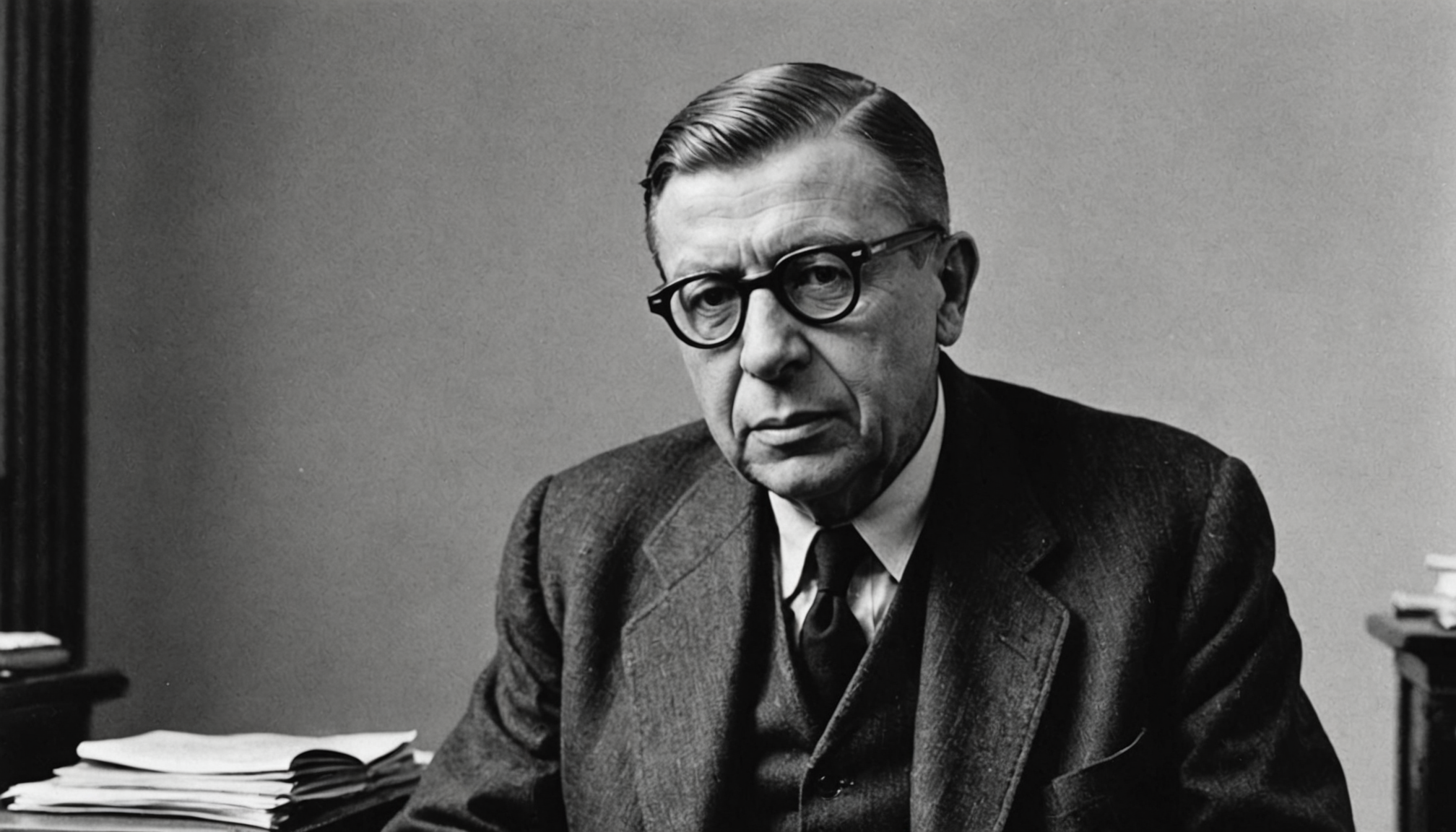
Jean-Paul Sartre, a towering figure in 20th-century philosophy, is often regarded as the face of existentialism. Born in 1905 in Paris, Sartre’s life spanned a tumultuous period marked by two world wars, the rise of totalitarian regimes, and profound social change. His experiences during these times deeply influenced his thinking, leading him to grapple with the fundamental questions of human existence. Sartre was not just a philosopher; he was also a playwright, novelist, and political activist, which allowed him to explore the human condition through various lenses. His works, such as “Being and Nothingness” and “Nausea,” invite readers to confront the complexities of freedom, choice, and the often disconcerting nature of existence itself.
Sartre’s existentialism is rooted in the belief that individuals are not defined by any predetermined essence or nature. Instead, he posits that we are free to create our own identities through our choices and actions. This radical idea challenges conventional notions of morality and purpose, urging us to take responsibility for our lives in a world that can often feel chaotic and indifferent. As we delve into Sartre’s philosophy, we will explore how his ideas resonate with our own experiences of grief, choice, and the search for meaning in an unpredictable world.
Jean-Paul Sartre’s concept of “existence precedes essence” emphasizes the idea that individuals first exist and then define their own essence through actions and choices. This existentialist viewpoint can be further explored in the article titled “Business Podcasts at Different Levels,” which discusses how individuals in the business world can shape their professional identities and values through their experiences and decisions. To read more about this topic, you can visit the article here: Business Podcasts at Different Levels.
The concept of Existence Precedes Essence
At the heart of Sartre’s philosophy lies the provocative assertion that “existence precedes essence.” This idea suggests that humans are born into a world without inherent meaning or purpose. Unlike a manufactured object, which is created with a specific function in mind—think of a knife designed to cut—humans come into existence first and only later define themselves through their actions and choices. This notion liberates us from the constraints of predetermined roles or identities, placing the onus of meaning squarely on our shoulders.
This perspective can be both exhilarating and daunting. On one hand, it empowers us to shape our destinies and embrace our individuality. We are not bound by societal expectations or biological imperatives; instead, we have the freedom to carve out our own paths. On the other hand, this freedom can lead to feelings of anxiety and isolation. If we are responsible for creating our own essence, what happens when we falter or make choices that lead us astray? Sartre invites us to confront these uncomfortable truths, urging us to embrace our freedom while acknowledging the weight of our choices.
The rejection of essentialism

Sartre’s rejection of essentialism is a radical departure from traditional philosophical thought. Essentialism posits that entities possess inherent qualities that define their nature—qualities that exist independently of individual experience. For instance, one might argue that there is an essence of “humanity” that dictates how humans should behave or what they should value. Sartre vehemently opposes this view, asserting that such beliefs limit our understanding of human potential and creativity.
By discarding essentialism, Sartre opens up a space for exploration and self-definition. He encourages us to question societal norms and expectations that seek to impose rigid identities upon us. In doing so, he acknowledges the fluidity of human experience; we are not static beings but dynamic individuals capable of growth and change. This rejection of fixed essences invites us to engage with our identities more authentically, allowing us to embrace the complexities and contradictions that make us who we are.
The role of freedom and responsibility

Freedom is a cornerstone of Sartre’s existentialism, but it comes with an accompanying burden: responsibility. In a world devoid of inherent meaning, we are tasked with creating our own values and purposes. This freedom can be exhilarating; it allows us to pursue our passions and forge our own paths. However, it also means that we must confront the consequences of our choices. There is no external authority to blame for our failures or missteps; we alone bear the weight of our decisions.
This emphasis on responsibility can be particularly challenging in moments of crisis or grief. When faced with loss or suffering, it is easy to feel overwhelmed by the chaos of existence. Yet Sartre encourages us to confront these feelings head-on, reminding us that even in our darkest moments, we have the power to choose how we respond. This perspective can be liberating; it allows us to reclaim agency over our lives, even when circumstances seem insurmountable.
Jean-Paul Sartre’s concept of “existence precedes essence” emphasizes the idea that individuals create their own values and meaning through their choices and actions. This existentialist perspective can be further explored in various contexts, including the realm of modern media and communication. For instance, an article discussing innovative strategies for promoting podcasts highlights how creators can shape their own narratives and reach audiences effectively. You can read more about this in the article on clever ways to get your podcast heard here. This connection illustrates how the principles of existentialism can apply to contemporary forms of expression and creativity.
Authenticity and inauthenticity
| Concept | Explanation |
|---|---|
| Existence precedes essence | According to Sartre, individuals exist first and then define their essence through their choices and actions. |
| Freedom | Sartre believed that individuals have the freedom to create their own values and meaning in life. |
| Responsibility | He emphasized the idea that individuals are responsible for their own existence and the choices they make. |
| Authenticity | Sartre encouraged individuals to live authentically by being true to themselves and taking responsibility for their actions. |
Authenticity is a central theme in Sartre’s work, representing the ideal state in which individuals fully embrace their freedom and responsibility. To live authentically is to acknowledge one’s choices and their consequences while remaining true to oneself. It requires a deep understanding of one’s desires, values, and motivations—an ongoing process of self-discovery that demands courage and introspection.
In contrast, inauthenticity arises when individuals conform to societal expectations or deny their own freedom. This can manifest as a refusal to confront uncomfortable truths about oneself or an unwillingness to take responsibility for one’s actions. Sartre warns against this tendency, suggesting that living inauthentically leads to a sense of alienation and despair. By embracing authenticity, we can cultivate deeper connections with ourselves and others, fostering a sense of belonging in an often fragmented world.
Jean-Paul Sartre’s concept of “existence precedes essence” challenges traditional philosophical views by asserting that individuals are not born with a predetermined purpose but instead create their own meaning through choices and actions. This idea resonates with various aspects of existentialism and can be further explored in a related article that discusses the implications of personal freedom and responsibility. For a deeper understanding of how these themes manifest in everyday life, you can read more in this insightful piece about the complexities of human experience found here.
The concept of bad faith
One of Sartre’s most compelling ideas is that of “bad faith,” a form of self-deception in which individuals deny their freedom and responsibility by adopting false identities or conforming to societal norms. Bad faith allows people to escape the anxiety associated with making choices by hiding behind roles or labels—such as “employee,” “parent,” or “friend.” In doing so, they relinquish their agency and become passive participants in their own lives.
Sartre illustrates this concept through various examples, such as a waiter who overly identifies with his role, performing it with exaggerated enthusiasm while neglecting his true self. This behavior reflects a refusal to acknowledge one’s freedom and the weight of personal responsibility. Bad faith can be comforting in the short term; it provides an illusion of security in a chaotic world. However, Sartre argues that it ultimately leads to discontentment and alienation from oneself and others.
The relationship between the self and others
Sartre’s exploration of existence also extends to the relationship between the self and others. He famously stated that “hell is other people,” highlighting the tension that arises when individuals interact with one another. Our relationships can serve as mirrors reflecting our choices and identities back at us, often forcing us to confront uncomfortable truths about ourselves.
This dynamic can lead to feelings of vulnerability and anxiety as we navigate social expectations and judgments. However, Sartre also emphasizes the potential for connection and understanding within these relationships. By engaging authentically with others, we can foster deeper bonds that enrich our lives and provide support in times of struggle. Ultimately, Sartre encourages us to embrace both the challenges and rewards of interpersonal relationships as we seek meaning in our shared existence.
The existentialist view on ethics and morality
Sartre’s existentialism presents a unique perspective on ethics and morality, one that diverges from traditional frameworks based on absolute truths or universal principles. Instead, he argues that moral values are not preordained but rather constructed through individual choices and experiences. This view places significant emphasis on personal responsibility; since there are no external guidelines dictating right or wrong, each person must navigate their moral landscape based on their values.
This approach can be both liberating and daunting. On one hand, it empowers individuals to define their own ethical standards based on their lived experiences; on the other hand, it requires them to grapple with the consequences of their choices without recourse to absolutes. In this sense, Sartre’s existentialism challenges us to engage deeply with our values and consider how they align with our actions—a process that can lead to greater self-awareness and authenticity.
The influence of existentialism on psychology and literature
Sartre’s existentialism has left an indelible mark on both psychology and literature, shaping how we understand human behavior and experience. In psychology, existentialist ideas have influenced therapeutic approaches that emphasize personal responsibility, choice, and authenticity—such as existential therapy. This form of therapy encourages individuals to confront their anxieties about existence while exploring their values and desires in a supportive environment.
In literature, Sartre’s influence is evident in the works of writers who grapple with themes of freedom, identity, and alienation. Authors like Albert Camus and Simone de Beauvoir have drawn upon existentialist ideas to explore the complexities of human existence through their characters’ struggles for meaning in an indifferent world. These literary explorations resonate deeply with readers who seek to understand their own experiences within the broader context of existence.
Criticisms and controversies surrounding Sartre’s philosophy
Despite its profound impact, Sartre’s philosophy has not been without its critics. Some argue that his emphasis on individual freedom can lead to moral relativism—a belief that all values are equally valid without any objective basis for judgment. This perspective raises concerns about accountability; if individuals are free to define their own ethics without external guidance, how do we address issues like injustice or oppression?
Additionally, some critics contend that Sartre’s focus on personal responsibility may overlook systemic factors that influence individual choices. While he emphasizes the importance of confronting one’s freedom, critics argue that this perspective can inadvertently downplay the role of social structures in shaping human experience. These criticisms invite us to engage critically with Sartre’s ideas while recognizing their limitations in addressing complex social realities.
The lasting impact of Sartre’s existentialism
Despite these criticisms, Sartre’s existentialism continues to resonate with contemporary audiences grappling with questions of identity, meaning, and freedom. His ideas encourage us to confront the complexities of existence head-on while embracing our capacity for choice and self-definition. In a world marked by uncertainty and change, Sartre’s philosophy offers a framework for navigating life’s challenges with authenticity and courage.
As we reflect on Sartre’s legacy, we are reminded that his existentialism is not merely an abstract philosophical exercise but a deeply human exploration of what it means to be alive. It invites us to engage with our experiences—both joyful and painful—while recognizing our shared humanity in the face of life’s uncertainties. Ultimately, Sartre’s work serves as a powerful reminder that while existence may be fraught with challenges, it is also rich with possibilities for growth, connection, and meaning-making in an ever-evolving world.
FAQs
1. Who is Jean-Paul Sartre?
Jean-Paul Sartre was a French philosopher, playwright, and novelist, best known for his contributions to existentialism and his influential works such as “Being and Nothingness” and “No Exit”.
2. What is the concept of “existence precedes essence” in Sartre’s philosophy?
In Sartre’s philosophy, the concept of “existence precedes essence” emphasizes that individuals exist first and then define themselves through their choices and actions. This means that there is no predetermined essence or purpose for individuals, and they are responsible for creating their own meaning and identity.
3. How does Sartre’s philosophy of “existence precedes essence” relate to existentialism?
Sartre’s philosophy of “existence precedes essence” is a fundamental aspect of existentialism, which emphasizes individual freedom, responsibility, and the absence of inherent meaning in life. According to Sartre, individuals are condemned to be free and must take responsibility for their choices and actions.
4. What are some key works by Jean-Paul Sartre that explore the concept of “existence precedes essence”?
Some of Sartre’s key works that explore the concept of “existence precedes essence” include “Being and Nothingness”, “Existentialism is a Humanism”, and “No Exit”. These works delve into the themes of individual freedom, choice, and the creation of one’s own identity.
5. How has Sartre’s philosophy of “existence precedes essence” influenced modern thought?
Sartre’s philosophy of “existence precedes essence” has had a significant impact on modern thought, particularly in the fields of existentialist philosophy, psychology, and literature. His ideas have influenced discussions on individual freedom, responsibility, and the search for meaning in a seemingly indifferent world.