Let’s pause for a moment from the rush of your day, perhaps as you’re enjoying a quiet meal, to consider the world you inhabit. Not just the physical world you move through, but the intricate web of ideas, forces, and structures that quietly, yet profoundly, shape your experience. What if we looked at the news headlines, the commute, your job, and even your weekend sports, not as isolated events, but as threads woven into a larger tapestry, one that philosophers have been trying to decipher for centuries?
The Whispers of Power: From Monarchs to Memes
You open your phone, scroll through a news feed. A government official announces a new policy, a corporation reports record profits, a viral video sparks outrage. Each event, in its own way, is a manifestation of power. For centuries, thinkers grappled with who should hold power and why. Mary Wollstonecraft, in an era when women were largely excluded from political life, argued passionately for reason as the foundation of rights, suggesting that true progress depended on individuals, regardless of gender, being able to exercise their rational faculties. She saw power not as divinely granted, but as something that needed justification and accountability, a radical notion in her time.
Fast forward to today, and the exercise of power is far more diffuse. It’s not just kings and queens, or even just elected officials. Think of the algorithms that curate your social media feed, subtly influencing your perceptions and consuming your attention. This kind of power, less overt than a royal decree, but no less influential, is something the Frankfurt School critically examined. They worried about how mass culture, delivered through new media, could subtly homogenize thought and stifle critical inquiry. You might feel a flicker of this when you notice how certain narratives dominate conversations, or how difficult it is to step outside a prevailing consensus, even if you feel uneasy about it. This isn’t about blaming a single entity, but recognizing how systems can shape perceptions and limit possibilities.
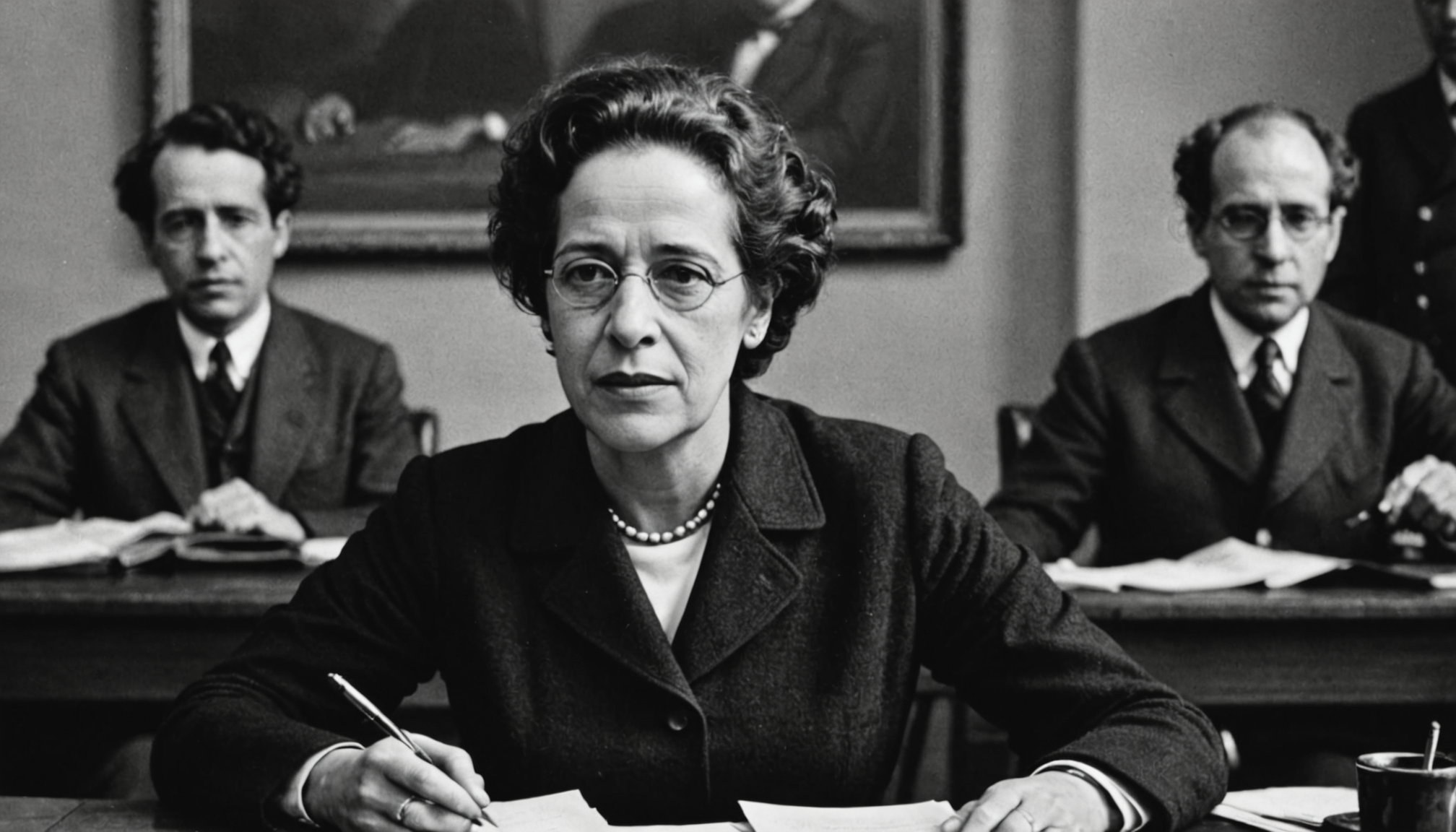
Hannah Arendt’s exploration of revolution offers profound insights into the nature of political change and the human condition. For a deeper understanding of her ideas and their implications, you might find the article “Everybody Loves Pineapples and Donuts” particularly enlightening. This piece delves into the complexities of societal transformation and the philosophical underpinnings that can be traced back to Arendt’s work. To read more about these themes, you can visit the article at this link.
Your Daily Bread: Work, Wealth, and Fairness
Consider your work. Whether you’re at a desk, on a factory floor, or providing a service, your labor is part of a vast economic system. The idea of “earning a living” is fundamental, but how that living is earned, and what constitutes a fair return for your effort, has been a constant point of philosophical debate.
Adam Smith, often called the father of modern economics, spoke of the “invisible hand” of the market, suggesting that individual self-interest, when allowed to operate freely, could lead to collective prosperity. He believed in specialization and trade, recognizing how they could increase efficiency and abundance. Yet, even Smith understood the need for certain rules and institutions to ensure a functioning society.
Think about the sheer scale of global trade today. Goods designed in one country, manufactured in another, and sold in a third, all moving across borders and time zones. This intricate dance of supply and demand, facilitated by technology, connects your daily purchases to distant economies and livelihoods.
Economic Justice: A Shifting Landscape
The question of economic justice isn’t about whether some people are richer than others, but about the fairness of the distribution of wealth and opportunities.
- Meritocracy often suggests rewards based on individual effort and talent. But how do we account for inherited wealth or unequal access to education and resources?
- The concept of a “living wage” raises questions about the minimum standard of living society should guarantee. Where does this standard come from, and who is responsible for ensuring it?
- Progressive taxation is a mechanism to redistribute wealth, often based on the idea of societal contribution and collective well-being. But where do we draw the line between necessary redistribution and stifling individual incentive?
These aren’t easy questions, and different societies and eras have offered varying answers. The tension between individual liberty and collective welfare is a recurring theme. When you consider the cost of housing in your city, the challenges of affording healthcare, or the difficulty of upward mobility for some, you’re experiencing these long-standing philosophical debates in a very real, personal way.
Stones and Strangers: Cities, Borders, and Belonging
Look around your city. The buildings, the parks, the public spaces – they are testaments to human ingenuity and communal effort. Cities, for millennia, have been centers of trade, culture, and exchange. They are also places of immense complexity, where people from diverse backgrounds live in close proximity.
Building Communities and Facing Anonymity
- Shared resources: Parks, libraries, public transport – these are infrastructures that support collective life. The allocation and maintenance of these resources often spark debates about fairness and responsibility.
- Anonymity and connection: Cities offer both the freedom of anonymity and the challenge of fostering genuine connection in a vast, bustling environment. How do you find your place, forge bonds, and contribute to the civic life of such a complex organism?
Beyond city limits, borders define nations, and by extension, who belongs and who is an outsider. Throughout history, these lines have been drawn, redrawn, and fiercely defended. Think of the stories of migration, of people seeking new opportunities or fleeing hardship. These movements raise fundamental questions about human rights, national sovereignty, and our collective responsibility to one another.
Edmund Burke, a conservative thinker, emphasized the importance of tradition and inherited institutions in maintaining social order. He saw society as a perpetual contract, not just between the living, but between the living, the dead, and those yet to be born. From this perspective, borders and established norms are not arbitrary; they are the result of generations of accumulated wisdom and experience, providing stability amidst change. Yet, even Burke acknowledged the need for societies to adapt, albeit cautiously, to evolving circumstances. The push and pull between tradition and progress, between established order and the need for new solutions, is a constant dynamic in how we manage our shared spaces and define our communities.
Join us on Patreon at https://www.patreon.com/cw/PhilosophyforLunch to support our philosophy discussions over lunch.
The News You Consume: Media, Culture, and the Unseen Hand
Every day, you are bombarded with information. News headlines, social media posts, advertisements, entertainment. This constant stream of messages shapes your understanding of the world, influencing your opinions, anxieties, and aspirations.
The Frankfurt School, deeply concerned about the rise of mass media, argued that it could become a tool for social control. They weren’t suggesting a single evil orchestrator, but rather that the systems of media production and consumption could subtly reinforce dominant ideologies, making it difficult for individuals to think critically or imagine alternative ways of living. This is Gramsci’s concept of hegemony at work – the idea that a ruling group maintains power not just through force, but by shaping the common-sense beliefs and cultural norms that make its dominance seem natural and legitimate.
Think about the narratives that consistently appear in the news, or the images that define success in advertising. Are these truly neutral reflections of reality, or do they subtly guide your perceptions and desires? This isn’t about being cynical, but about cultivating a healthy skepticism and asking: who benefits from this message? What perspectives are being amplified, and which ones are being silenced?
Even in sports, a seemingly neutral arena of competition, cultural values are embedded. The emphasis on individual achievement, teamwork, fair play, or even national pride – these are all reflections of broader societal norms and aspirations. When you cheer for a team or lament a loss, you’re participating in a cultural ritual that carries deeper meanings about identity, belonging, and shared values.
Hannah Arendt’s exploration of revolution offers profound insights into the nature of political change and the human condition. For those interested in delving deeper into this topic, a related article that examines the philosophical underpinnings of revolutionary thought can be found at Philosophy for Lunch. This resource provides a comprehensive analysis that complements Arendt’s ideas, shedding light on the complexities and implications of revolutionary movements throughout history.
The Power to Begin Anew: Hannah Arendt and Revolution
Finally, let’s consider the idea of change itself. You encounter moments in your life, both personal and public, where things feel stagnant, unjust, or simply ready for something new. This is where Hannah Arendt offers a profound insight into the nature of revolution.
Arendt, a brilliant political philosopher, was deeply concerned with totalitarianism and the erosion of human freedom. She didn’t see revolution merely as an act of violence or a change in government. For Arendt, an authentic revolution was about the founding of a new political space, a place where citizens could gather, engage in public deliberation, and collectively create a new beginning.
What Arendt Meant by Revolution
Arendt distinguished true revolution from mere rebellion or coup.
- A “new beginning”: Rather than simply overthrowing an old order, Arendt believed a revolution should establish a new constitution, new laws, and new institutions based on freedom and shared public discourse. It’s about taking collective action to bring something entirely new into existence.
- The power of acting in concert: For Arendt, power wasn’t about domination, but about the ability of people to act together, to persuade each other through speech and argument, and to create a common world. Revolution, in its truest form, was the emergence of this collective power.
- Public freedom: This wasn’t merely the “freedom from” oppression, but the “freedom to” participate in public life, to speak, to be heard, and to contribute to the shaping of society.
Think about moments in your own life or in history when people have come together, not just to protest, but to articulate a vision for a better future, and to work collaboratively to achieve it. Whether it’s a neighborhood initiative, a social movement, or a nation grappling with its founding principles, this impulse to begin anew, to create a shared future through deliberation and action, resonates with Arendt’s understanding of truly revolutionary moments.
It’s tempting to think of change as something that happens to us, or as something driven by powerful figures. But Arendt reminds us of the inherent human capacity for natality – the ability to bring something new into the world, to initiate action, and to create a different future. This capacity lies within you, within your community, and it’s what fuels the possibility of positive change.
Carrying the Questions Forward
As you return to your day, perhaps infused with a slightly different perspective, consider these questions. They are not meant to have definitive answers, but to spark further reflection and conversation:
- What “invisible hands” – economic, social, or technological – do you notice shaping your daily choices and opportunities?
- In what ways do the news and media you consume influence your understanding of fairness and justice, without you even realizing it?
- Where do you see genuine acts of “new beginning” – small or large – in your community or in the wider world, driven by people coming together to create something different?
FAQs
1. Who was Hannah Arendt?
Hannah Arendt was a German-born American political theorist and philosopher. She is best known for her works on totalitarianism, the nature of power, and the nature of revolution.
2. What did Hannah Arendt say about revolution?
Hannah Arendt believed that revolution was a necessary and inevitable part of human history. She argued that revolutions are a way for people to assert their freedom and challenge oppressive systems.
3. What were Hannah Arendt’s views on the French Revolution?
Hannah Arendt viewed the French Revolution as a pivotal moment in history that demonstrated the power of the people to overthrow oppressive regimes. She also critiqued the violence and terror that often accompanies revolutions.
4. How did Hannah Arendt’s views on revolution differ from other political theorists?
Hannah Arendt’s views on revolution differed from other political theorists in that she emphasized the importance of action and public participation in the political process. She also focused on the potential for revolutions to bring about positive change.
5. What is the significance of Hannah Arendt’s ideas on revolution today?
Hannah Arendt’s ideas on revolution continue to be influential in political theory and philosophy. Her emphasis on the importance of public engagement and the potential for revolutions to bring about positive change remains relevant in contemporary discussions about democracy and social movements.