

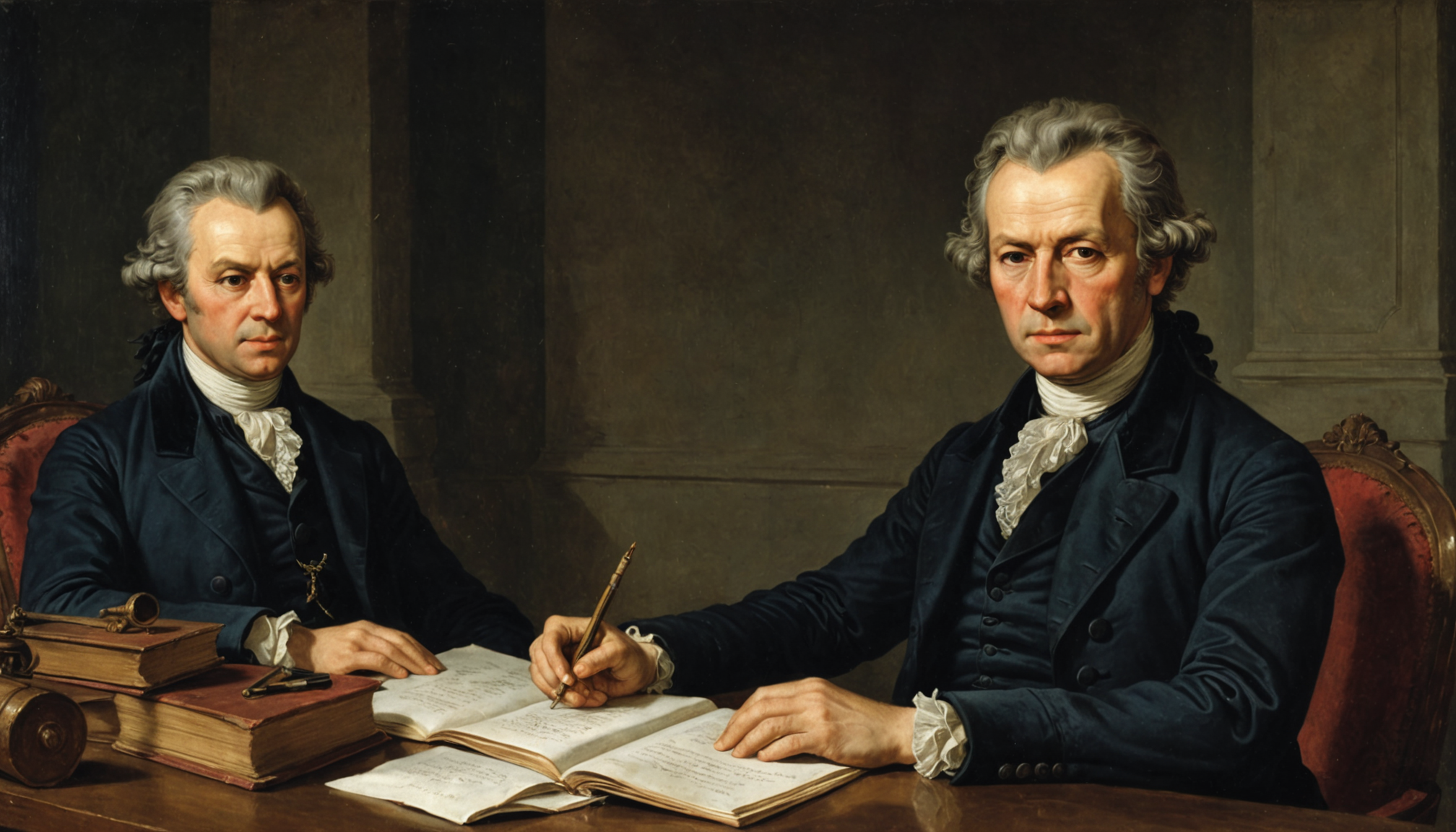
Immanuel Kant, an 18th-century German philosopher, is often regarded as one of the most significant figures in Western philosophy. His work laid the groundwork for modern ethical thought, particularly through his formulation of the Categorical Imperative. This principle serves as a cornerstone of his moral philosophy, emphasizing the importance of duty and moral law. Unlike other ethical theories that focus on the consequences of actions, Kant’s approach is rooted in the idea that certain actions are inherently right or wrong, regardless of their outcomes. This perspective invites us to consider not just what we do, but why we do it, urging us to act according to principles that can be universally applied.
Kant’s Categorical Imperative challenges us to think critically about our moral choices. It asks us to consider whether our actions could be willed as a universal law applicable to everyone. This notion of universality is not merely an abstract concept; it has practical implications for how we navigate our daily lives and make ethical decisions. By grounding morality in reason rather than emotion or consequence, Kant provides a framework that encourages us to act with integrity and respect for others. In this exploration, we will delve deeper into the nuances of Kant’s ethical system and its relevance to contemporary moral dilemmas.
In exploring the nuances of Kant’s categorical imperative, one can gain further insights by examining how ethical principles can be effectively communicated and understood in modern contexts. A related article that discusses innovative strategies for enhancing the reach of philosophical discussions, including those on Kantian ethics, is available at this link: Clever Ways to Get Your Podcast Heard. This resource highlights the importance of engaging audiences with complex ideas, making philosophical concepts more accessible and relatable.
The concept of duty in Kantian ethics
At the heart of Kantian ethics lies the concept of duty. For Kant, moral actions are not determined by personal inclinations or societal norms but by a sense of obligation that arises from rational thought. This duty is what compels individuals to act in accordance with moral law, which is discerned through reason. Kant believed that true moral worth comes from acting out of duty rather than from self-interest or emotional impulses. This distinction is crucial; it suggests that the motivation behind our actions is as important as the actions themselves.
Kant’s emphasis on duty also implies that moral obligations are universal and binding. When we recognize our duty, we acknowledge a responsibility that transcends personal desires and situational contexts. This perspective encourages us to cultivate a sense of moral integrity, where our actions align with our rational understanding of what is right. In everyday life, this might manifest as a commitment to honesty, fairness, and respect for others, even when it is inconvenient or challenging. By grounding our ethical decisions in duty, we foster a sense of accountability that can guide us through complex moral landscapes.
The first formulation of the Categorical Imperative: The principle of universalizability

Kant’s first formulation of the Categorical Imperative is often summarized by the principle of universalizability: “Act only according to that maxim whereby you can at the same time will that it should become a universal law.” This means that before we act, we should consider whether the guiding principle behind our action could be applied universally without contradiction. If everyone were to act in the same way, would it lead to a coherent and functional society? If not, then the action is deemed morally impermissible.
This principle encourages us to think beyond our individual circumstances and consider the broader implications of our actions. For instance, if one were to lie to get out of a difficult situation, they must ask themselves: what if everyone lied in similar situations? The result would be a breakdown of trust and communication, rendering lying ineffective as a strategy. By applying this test of universalizability, we can evaluate our intentions and ensure that our actions contribute positively to the moral fabric of society.
The second formulation of the Categorical Imperative: The principle of humanity

Kant’s second formulation of the Categorical Imperative introduces another critical dimension to his ethical framework: the principle of humanity. This formulation states that we should “act in such a way that you treat humanity, whether in your own person or in the person of any other, always at the same time as an end and never merely as a means.” This principle emphasizes the intrinsic value of every individual and underscores the importance of respecting others’ autonomy and dignity.
In practical terms, this means that our interactions with others should be guided by respect for their humanity. We should avoid exploiting or manipulating others for our own gain, recognizing that each person has their own goals, desires, and rights. This perspective fosters empathy and compassion in our relationships, encouraging us to consider how our actions affect others. For example, in a workplace setting, treating colleagues as mere tools for achieving personal success undermines their value as individuals. Instead, fostering an environment where everyone’s contributions are recognized and respected aligns with Kant’s ethical vision.
Kant’s categorical imperative is a fundamental concept in moral philosophy that emphasizes the importance of universal principles in ethical decision-making. For those looking to delve deeper into this topic, a related article can be found at Philosophy for Lunch, which offers a comprehensive overview of Kant’s ideas and their implications for contemporary ethical discussions. Understanding this imperative can significantly enhance one’s grasp of moral reasoning and the foundations of ethical behavior.
Kant’s rejection of consequentialist ethics
| Category | Explanation |
|---|---|
| Definition | The categorical imperative is a moral law that applies to all rational beings and is based on the concept of duty. |
| Universalizability | Actions are only morally permissible if the individual can rationally will that everyone else should also act in the same way. |
| Humanity as an end | Individuals should always be treated as ends in themselves, never merely as a means to an end. |
| Autonomy | Individuals have the capacity for rational self-governance and should act according to their own freely chosen moral principles. |
One of the most significant aspects of Kant’s ethical philosophy is his rejection of consequentialist ethics—the idea that the morality of an action is determined solely by its outcomes. For Kant, this approach is fundamentally flawed because it reduces morality to a calculation of benefits and harms, neglecting the importance of intention and principle. He argued that if we base our moral judgments solely on consequences, we risk justifying unethical actions if they lead to favorable results.
Kant believed that moral actions must be grounded in duty and guided by rational principles rather than fluctuating outcomes. This perspective challenges us to consider the ethical implications of our choices beyond immediate results. For instance, while lying might yield short-term benefits, it ultimately undermines trust and integrity—values that are essential for a functioning society. By prioritizing duty over consequences, Kant encourages us to cultivate a deeper understanding of morality that transcends situational ethics.
Kant’s categorical imperative is a fundamental concept in moral philosophy that emphasizes the importance of universalizability in ethical decision-making. For a deeper understanding of how this principle can be applied in everyday situations, you might find it interesting to explore an article that discusses its implications in a more relatable context. This article, which can be found here, illustrates how seemingly simple choices can reflect complex moral principles, making Kant’s ideas more accessible and engaging.
Understanding the role of reason in the Categorical Imperative
Reason plays a central role in Kant’s Categorical Imperative. For him, moral law is not derived from external sources or divine commands but emerges from rational thought. This means that every individual has the capacity to discern right from wrong through their ability to reason. Kant believed that moral principles should be accessible to all rational beings, allowing them to engage in ethical deliberation and arrive at sound moral judgments.
This emphasis on reason also implies that morality is not subjective; rather, it is grounded in universal principles that apply to all rational agents. When we engage with the Categorical Imperative, we are called to reflect on our values and beliefs critically. This process requires us to set aside personal biases and emotions in favor of objective reasoning. In everyday life, this might mean taking a step back during conflicts or ethical dilemmas to assess the situation through a rational lens rather than reacting impulsively based on feelings or societal pressures.
Criticisms and limitations of Kant’s Categorical Imperative
Despite its profound influence on ethical thought, Kant’s Categorical Imperative has faced various criticisms over the years. One common critique is its perceived rigidity; critics argue that it can lead to morally questionable outcomes when applied too strictly. For instance, if one were faced with a situation where lying could save a life—such as hiding someone from an aggressor—Kant’s framework might suggest that lying is inherently wrong regardless of the consequences. This inflexibility raises questions about whether moral principles should allow for exceptions in extreme circumstances.
Another criticism centers on the assumption that all rational beings will arrive at the same moral conclusions through reason alone. Critics argue that cultural differences and individual experiences shape our understanding of morality in ways that Kant’s framework does not fully account for. This raises important questions about whether a single ethical standard can truly apply across diverse contexts and societies. While Kant’s emphasis on universality aims for consistency in moral reasoning, it may overlook the complexities inherent in human experience.
Applying Kant’s Categorical Imperative to real-life ethical dilemmas
Despite its criticisms, Kant’s Categorical Imperative remains a valuable tool for navigating real-life ethical dilemmas. Its emphasis on duty and universalizability encourages individuals to reflect on their motivations and consider how their actions align with broader moral principles. For example, when faced with a decision about whether to report unethical behavior at work, one might apply the first formulation by asking whether it would be acceptable for everyone to remain silent about wrongdoing. If silence leads to a culture of complicity and harm, then reporting becomes not just permissible but necessary.
Similarly, applying the second formulation can guide interpersonal relationships and decision-making processes. In situations where one must choose between personal gain and respecting others’ rights—such as negotiating a business deal—considering how one would feel if they were on the receiving end can provide clarity. By treating others as ends in themselves rather than mere means to an end, individuals can foster more ethical interactions that prioritize mutual respect and understanding.
Kant’s influence on modern ethical theories
Kant’s ideas have had a lasting impact on modern ethical theories and continue to shape contemporary discussions about morality. His emphasis on duty and rationality has influenced deontological ethics—a branch of moral philosophy focused on rules and obligations—while also prompting critiques and adaptations from various philosophical perspectives. Many modern ethicists draw upon Kantian principles when discussing issues such as human rights, justice, and autonomy.
Moreover, Kant’s work has inspired movements advocating for social justice and equality by emphasizing the inherent dignity of every individual. His insistence on treating people as ends in themselves resonates with contemporary discussions about respect for diversity and inclusion in various spheres of life—from politics to education. As society grapples with complex ethical challenges today, Kant’s insights provide a foundational framework for understanding our responsibilities toward one another.
Comparing Kant’s Categorical Imperative to other ethical frameworks
When comparing Kant’s Categorical Imperative to other ethical frameworks—such as utilitarianism or virtue ethics—distinct differences emerge regarding how morality is understood and applied. Utilitarianism focuses primarily on maximizing overall happiness or minimizing suffering; thus, it evaluates actions based on their consequences rather than adherence to moral rules or duties. In contrast, Kantian ethics prioritizes intention and principle over outcomes.
Virtue ethics emphasizes character development and moral virtues rather than strict adherence to rules or consequences alone. While virtue ethics shares some common ground with Kantian thought—particularly regarding the importance of intention—it diverges by focusing more on cultivating good character traits rather than adhering strictly to universal maxims. These comparisons highlight how different ethical frameworks approach moral dilemmas from unique angles while offering valuable insights into human behavior.
The enduring relevance of Kant’s Categorical Imperative
In conclusion, Immanuel Kant’s Categorical Imperative offers profound insights into morality that remain relevant today. By emphasizing duty, reason, and respect for humanity, Kant challenges us to engage thoughtfully with our ethical choices and consider their broader implications for society. While criticisms exist regarding its rigidity and universality, its core principles continue to resonate in contemporary discussions about ethics.
As we navigate an increasingly complex world filled with moral dilemmas—ranging from personal relationships to global issues—the Categorical Imperative provides a framework for making principled decisions grounded in respect for others and commitment to duty. Ultimately, engaging with Kant’s ideas encourages us not only to reflect on our own values but also to strive toward creating a more just and compassionate society where every individual is treated with dignity and respect.
FAQs
What is Kant’s categorical imperative?
Kant’s categorical imperative is a moral principle that states that an action is only morally right if one can rationally will that everyone should do the same action in similar circumstances, regardless of personal desires or inclinations.
What are the formulations of the categorical imperative?
Kant proposed several formulations of the categorical imperative, including the formula of universal law, the formula of humanity, and the formula of autonomy. These formulations provide different perspectives on how to apply the principle to moral decision-making.
How does the categorical imperative differ from hypothetical imperatives?
The categorical imperative is distinguished from hypothetical imperatives in that it commands an action without reference to any end or purpose, while hypothetical imperatives are conditional and depend on a person’s individual desires or goals.
What are some criticisms of Kant’s categorical imperative?
Critics of Kant’s categorical imperative argue that it may not provide clear guidance in complex moral situations, and that it may be too rigid and inflexible in its application to real-world ethical dilemmas.
How does the categorical imperative relate to Kant’s broader ethical philosophy?
The categorical imperative is a central concept in Kant’s deontological ethical theory, which emphasizes the importance of moral duty and the inherent value of rationality in determining the rightness of actions.